Ambient Intelligence Lab

Research

Super Ambient Intelligence

01 Augment perception

New physical sensing on everyday devices.

Computational Sensing of Invisible Environmental Dynamics with Off-the-Shelf Sensors

We develop sensing systems that reveal environmental phenomena that are difficult for people and sensors to directly perceive in everyday settings.

  • Repurposing commodity sensors to capture subtle airflow, temperature-field, and soil-state changes.
  • Turning low-cost platforms into deployable tools for environmental understanding in real-world scenarios.
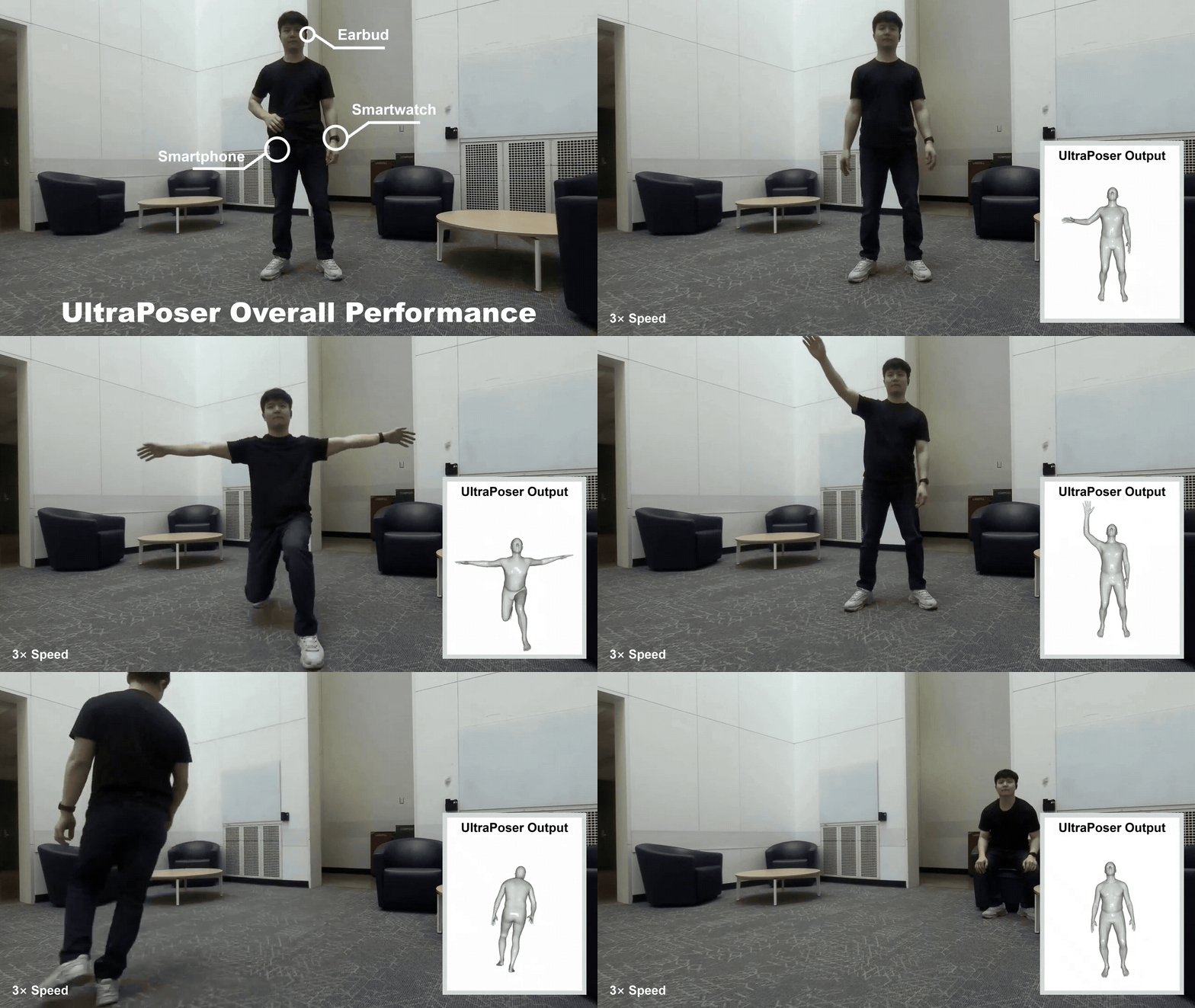
Health Sensing using Wearable Consumer Electronics

We build practical health sensing systems on consumer wearables and mobile devices for robust monitoring in everyday environments.

  • Repurposing earbuds, phones, and lightweight wearable platforms for continuous physiological and behavioral sensing.
  • Designing sensing pipelines that remain robust under motion, sparse sensing, and real-world deployment constraints.

Fine-grained Human Activity Sensing and Reasoning in Ambient Environments

We study how ambient and wearable sensing systems can capture fine-grained human activities and support higher-level reasoning about daily behaviors in real-world environments.

  • Combining multi-modal sensing for detailed activity understanding across body movement, context, and daily-life interactions.
  • Building sensing pipelines that support both precise recognition and richer behavioral reasoning.

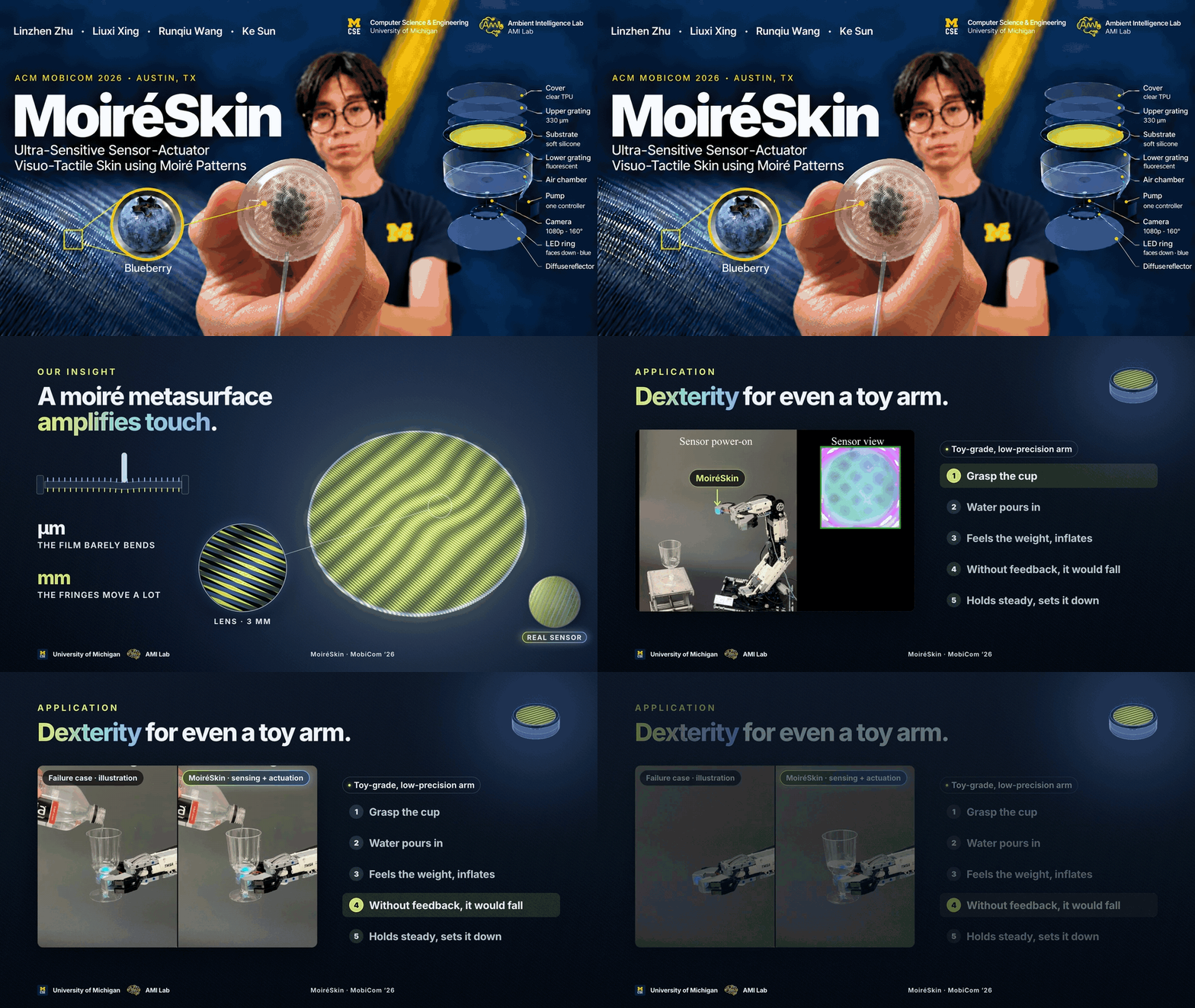
Tactile Sensing and Actuation for Robotics

This direction explores how low-cost sensing and actuation pipelines can give robots richer tactile perception and more practical interaction capabilities.

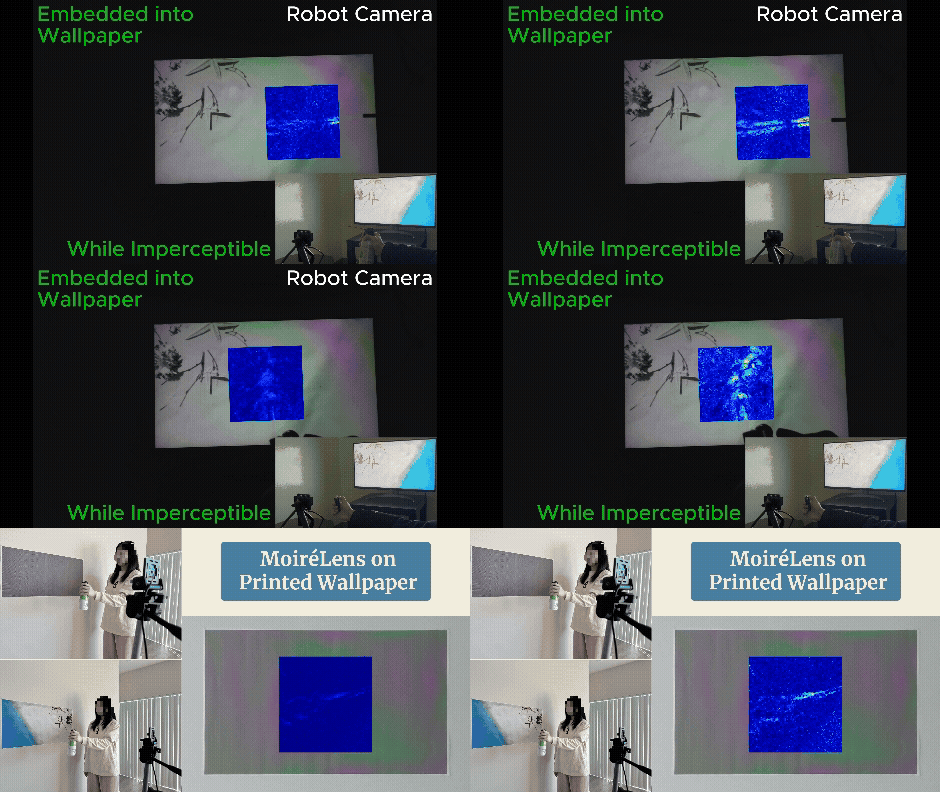
MoiréSkin visuo-tactile sensor and actuator

02 Augment interaction

Sensor-driven human-centered physical AI

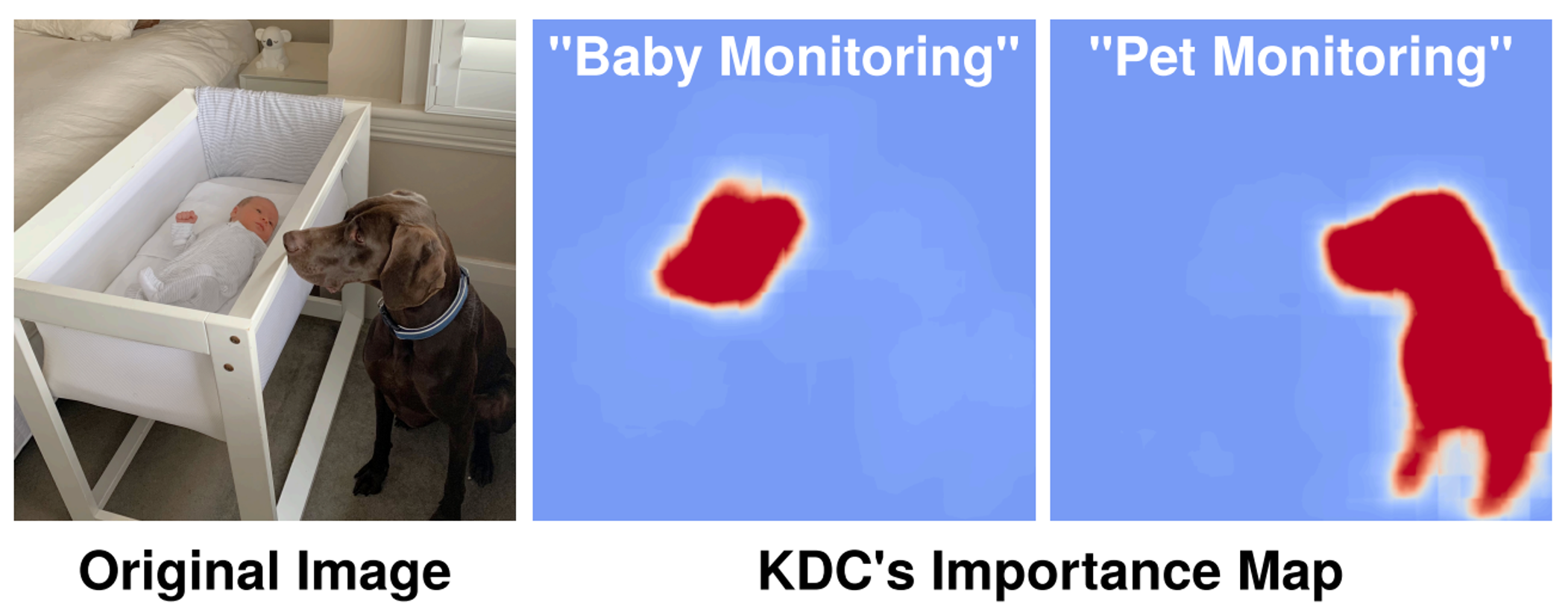
AI-Assisted Mobile System Optimization

We study how AI can help mobile and sensing systems make better decisions about communication, adaptation, and resource management under real-world constraints.

  • Using foundation and generative models to improve system efficiency, communication, and deployment practicality.
  • Designing adaptive mobile systems under limited bandwidth, compute, and storage budgets.
KDC preview

AI-Native Secure and Privacy-Preserving Sensing

We develop both attacks and defenses to better understand the trust, privacy, and security boundaries of sensing systems.

  • Studying how sensing modalities can leak private information or be manipulated by adversaries.
  • Designing practical defenses for mobile, acoustic, RF, and AI-driven sensing platforms.

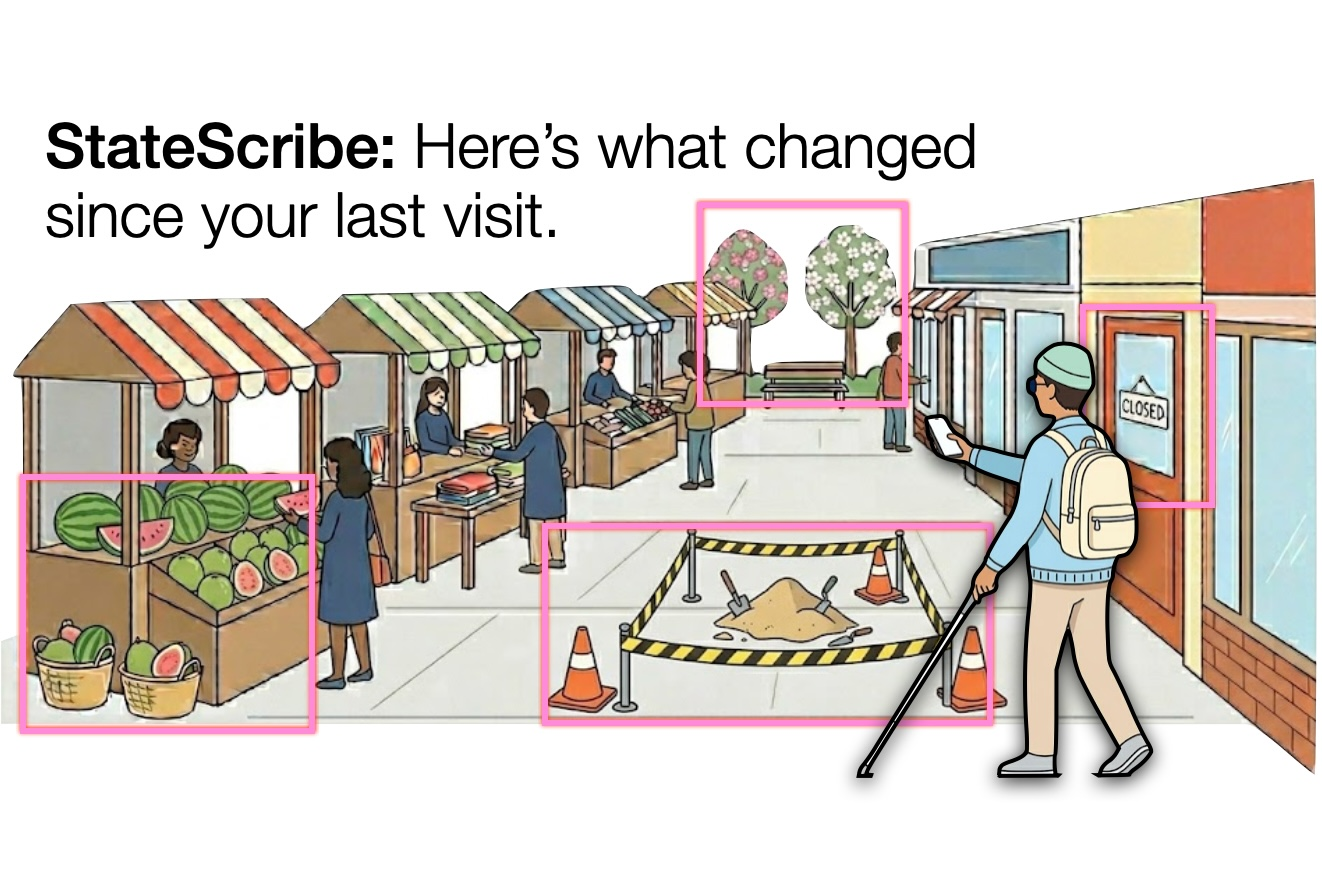
AI-Assisted Mobile Sensing System

This area studies how AI models and sensing pipelines can co-adapt to make mobile sensing systems more robust, data-efficient, and deployable.

Ongoing